A Green New Deal Town Hall

The town hall in Viroqua has come and gone.  It was May 14.  Life is crazy busy, and I am just posting this now.  So, here is a little reflection on what has transpired.  The town hall was successful . . . people came . . . 35-40 people . . . all activists.  Yes, I was preaching to the choir.  Oh, well.  I wonder what I would have done if the opposition showed up.

I didn’t use much of the Sunrise Movement’s presentation.  There was a different message I wanted to relay.  My stance is we live in a bubble . . . isolated from reality.  Scientists and biologists in the trenches feel the crisis.  They see the ice literally melting and species going extinct right before their eyes.  We, on the other hand, are living a normal life.  Climate change has moved very slowly over the 50+ years we have been talking about it.  Somehow, even the people who lived through the fires of Paradise, CA may not even think we have a crisis.  I could be wrong.  I read an article stating they are making plans to rebuild.  They were aware a fire was possible.  Don’t you want to move somewhere else after that!?

Every article I see now about the climate crisis is alarming.  But, we don’t see the ice melting and the species disappearing.  We are working and shopping.  So, my presentation focused on reminding people that everything we do burns fossil fuels.  And, that is how all that CO2 gets up there.

Another hopeful thing I brought up was that there is this, “defining moment,” I like to call it.  From the report the IPCC issued in October 2018 stating we have 12 years to turn climate change around, to the Sunrise Movement’s visits to the offices of Congresswoman Nancy Pelosi, Senator Dianne Feinstein, and Senator Mitch McConnell, Extinction Rebellion’s startup in November and April, Greta Thunberg’s inspirational talk at the climate talks in Poland, to the student climate strikes, this global climate crisis movement is incredible.  Who would have thought that this issue would finally be front and center!

And, it is not going away.

Although the Green New Deal is wide in scope, I brought up some solutions like regenerative agriculture, reducing beef and dairy, electric cars becoming more affordable and with increased miles per charge, passive home designs, heat pumps, growing our own food instead of relying on the grocery store, and eliminating air travel or at the very least limiting it.

The best thing about the town hall is that it has brought people together to work on this crisis in our little area.  We have our first Viroqua Climate Action meeting this Monday, June 10.  There are plans to start an Extinction Rebellion group, too.

But, as I sat thinking after eating my breakfast, looking out at Nature all around me, I had that sick feeling I used to get years ago, and I wanted to cry.  Everything we do is destroying this.  How do we stop it?

Keep going.

Discovery

Asparagus

Yes, I am clueless when it comes to growing vegetables, fruit trees, blueberries, etc.  I knew that asparagus comes early in the spring . . . so I have been going out to the asparagus plants I planted last summer to see if they were coming up.  Well, I was convinced they were dead . . . dried up and gone. But no . . . they are ALIVE!  I was so excited.  You know, it is the little things . . . and . . . this is food that comes up each year so that means less work . . . and . . . survival!

Rasberries

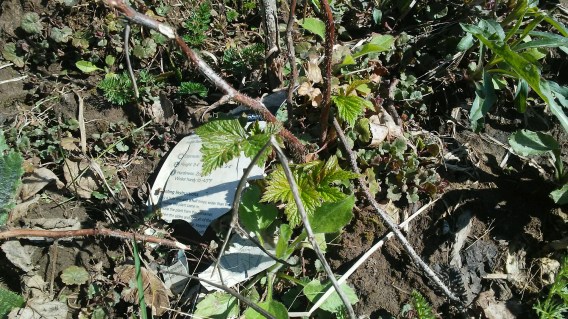
And, of course I was checking out other things for signs of life . . . like my raspberries.  And, here they are!  Now my blueberries don’t look so good.  No life yet.  But, my apple trees have buds now.  The gooseberry plant has had buds for several weeks.  My little seedlings in my tray have come up but I just found out there is nothing in that peat they are in so I need to get them into some soil right away.  The cabbage came up but were spindly and fell over so I just planted some seeds right in the ground.  I believe they are a cold weather plant so I can do that and if it dips down again, they should be okay.

So much to learn . . . but I know more than last year!

Extinction Rebellion Madison

Banner drop

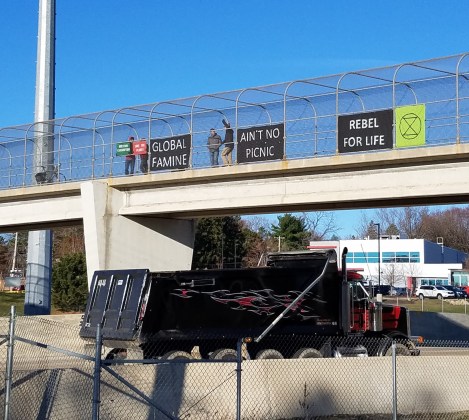
It was 5:30 a.m. this past Monday, and I was headed to Madison for Extinction Rebellion’s first direct action there.  I live about 2 hours away, and, although there are a lot of progressive people in my area . . . well . . . there wasn’t any Extinction Rebellion group.  And, because it is so rural, I wanted to reach a few more people.  I love my new rural lifestyle but there is nothing like being in the streets of Chicago for a protest.

So, I got some names of people from 350 Madison who may be interested in doing an Extinction Rebellion direct action.  Over the course of a few weeks, we corresponded via email and planned to do a banner drop.  A friend of mine in the Chicago Extinction Rebellion shared the great banner drop they did on St. Patrick’s Day on the Chicago River while the Wendella boats were going by.  My new Extinction Rebellion comrades in Madison loved the idea.

I gave them the measurements and how to get the lettering onto the fabric, etc. with a projector.  There were some challenges, and I offered whatever assistance I could via email but they came through and did a great job!

There was a city worker that stopped by after we got the banners up and told us that we shouldn’t be doing this.  None of us are ready to get arrested.  We are not as bold as Extinction Rebellion is in the UK or other European countries.  Even if a police officer came by, I seriously doubt whether he would have arrested us.

But then, maybe it is time I think about getting arrested.  This is climate change . . . and with all the new pressure on the governments of all countries to do something about it . . . nothing is happening yet.  What else is there besides getting arrested?

Garden Planning

Seedlings

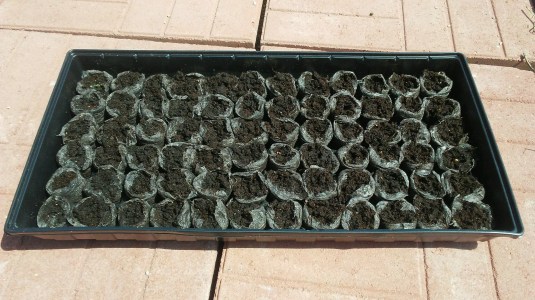
There are the seedlings that got planted in their little pods yesterday.  I am hoping I planted them soon enough.  Because this is all new, I don’t really know what I am doing.

Last year, I just planted everything imaginable.  This year, I am looking at it a bit differently.  I have a new strategy.  What are the vegetables that I use the whole year round?  Garden planning to be sustainable is a little different than just making a list of veggies to plant that taste good during the summer.  My goal is to eventually be able to provide all my food from my garden so there are a few things to consider and plan.  These may be obvious but perhaps not.

First, what vegetables store the best?

Second, what foods will I can?

Third, what foods can I grow the longest?

Fourth, what other items can I add during the time nothing is growing?

To start, potatoes, onions, garlic, pole beans, squash, cabbage, and tomatoes are the basis of my diet during the winter.  I use them during the rest of the year too but mainly in winter so I will want to make sure I plant plenty of them.  All of these last a long time after harvesting.  Cabbage and tomatoes don’t last that long once they are picked.  It is the canning and fermenting that makes them last.

Cold weather crops like kale, spinach, broccoli, etc. can be started early and planted again in the fall.  Although I have not started planting these crops yet this year, and it is the time to be doing it, eventually I will be on a routine.  Sprouting can be added during the winter months to get something fresh.  This is all once I get off the grocery store.

I read a book about eating seasonally.  It wasn’t that long ago that is what people did.  Right now, I am buying veggies like tomatoes, cucumbers, oranges, apples, avocados, and lemons, etc. that are grown thousands of miles away any time I want them.  Even when I was growing up, I am sure we couldn’t get pineapples, avocados, and other vegetables and fruits that are now shipped in from all parts of the world.  We survived.

I am also working on getting my soil in better condition.  I planted a cover crop last fall but ran out of seeds.  There are cover crops to plant in the spring, too, and I added some this week.  It will add nitrogen to the soil.  Then there is rotating the veggies.  I am sure there are things I should definitely not plant where a veggie was previously.  Some plants enrich the soil, and some severely deplete the soil.

All of this is a learning experience!

Sauerkraut — What’s the Big Deal?

Sauerkraut picture

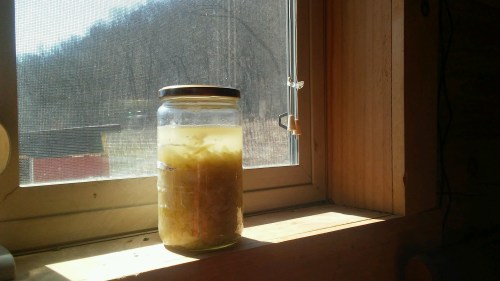
There is it . . . finally . . . after I donated three heads of cabbage to my compost pile.  It seems there is a strong element of procrastination when I am attempting a new activity.  Well, not every one.  There was nothing holding me back when I decided to build my shed.  But sauerkraut . . . well, that was a different story.  And, it isn’t that hard to do.  It takes maybe . . . 20 minutes.  Now, I am on my way.

So sauerkraut.  Why is it important?  First, it is a great way to preserve food.  It wasn’t that long ago that people didn’t have refrigeration.  It still needs to be kept cool after it’s made but it can last up to a year.  So, if we want to be prepared for the future, this is good to know how to do.

Second, it contains probiotics.  Fermenting foods is what people did, and we are missing out on those probiotics in our body.  Probiotics are live bacteria and yeasts that are are good for our intestines.  Your standard canned sauerkraut doesn’t have any probiotics because it is heated in the canning process.

There are other beneficial fermented foods and drinks like kim chi, kefir, and kombucha tea.  I am sure there are many more..

I have to say, my sauerkraut tastes really good.  It is amazing how it makes that transformation from cabbage to sauerkraut.  They recommend having it sit for 2 weeks.  Mine sat for 7 days.  I may try being a little more patient and comparing the difference.

Kim chi is next.  That has garlic, ginger, and cayenne added to it.  Nothing better to spice up a breakfast with!

The BBC’s “Can we transform the world in 12 years?”

Here is a short video from the BBC filled with inspiration.  It asks the question, “Can We Transform the World in 12 Years?”  It brought up the WII mobilization and how fast it was accomplished and what people did.  It was organized by the US government, and that is what we need again.  It was during a time when consumerism was just getting started.  We will have to deal with what people have gotten used to in the way of conveniences and products at our fingertips.   Just as an example, back then, very few people flew anywhere.  Now, people don’t hesitate to fly on vacation or business trips.  Will they put up a fight if it is taken away?  I believe if people truly know what we are up against, as we are headed for a 6th mass extinction, it is possible.

https://www.bbc.com/ideas/videos/can-we-transform-the-world-in-12-years/p073j3z5

What Does a Green New Deal Look Like?

The Green New Deal is out there, and we are hopeful that it will be implemented . . . and that it will be drastic enough.  I thought about what it would look like . . . and it may be a good opportunity to have a discussion about that because, other than having to get off fossil fuels . . . what does that mean?  And what does that look like?

Community Solutions uses the term “curtailment” and Ende Gelaende in Germany uses “degrowth.”  Both need to be out there side by side with “getting off fossil fuels.”  The consumer economy is not sustainable on a finite planet.  Let’s do a little subsistence living.  If that is going back . . . then that is what we need to do.  Remember, this is a crisis we are in.

Let’s look at where we came from and where we are.  On this continent, like many others, people lived off the land.  They built shelters, grew or gathered food, and reproduced.  There was basically “one” structure to heat.  I believe buildings account for about 30 percent of the CO2 in the atmosphere.  So, because of our consumer economy and need for jobs, our lifestyle has created the need for more buildings:  manufacturing plants, office buildings, distributions centers, and big box stores, which all need heat, electricity, and air conditioning.  Our focus should be to eliminate as many of these as we can.

Granted, we will decide what buildings we need to keep, as in hospitals and schools, etc.

Also, we need to remember that creating a solar, wind, rail, etc. infrastructure will need fossil fuels and will create more CO2.  The CO2 currently in the atmosphere will last 20-200 years.  It will not go away overnight simply because we are no longer using fossil fuels.

Air Travel

For starters and a good example, we need to ground all the planes.  Vacations and business trips are nice but not necessary.  And, it is important to remind ourselves we are talking about survival here, in order to determine what is essential for life . . . not what we are used to.  Planes take huge amounts of oil and pollute.  Chicago’s O’Hare airport has planes taking off and landing every few minutes.

So that means thousands of people will be without a job.  What do we do with those people?  Some will be at a much higher pay scale than others.  And, there will be many thousands of industries that will go through the same process of determining whether their product is “essential” or not.

We have been looking at a Just Transition for those working in the fossil fuel industry, but the reality is, it is much wider than just that industry.  For example, the grocery store has aisle after aisle of shelves filled with products that we can live without.  We may be asking what type of economy we will end up with.

Military

Second, and maybe this should be first, reduce the military, substantially.  It is one of the biggest contributors of CO2.  In the US, it also has the biggest budget.  Reducing it will free up money for other renewable energy projects, etc.  Again, it will involve creating many thousands of unemployed people.

Transportation

Build a better rail system, along with more buses, and electric cars.  This could actually create more jobs instead of eliminate them.  And instead of buying a new electric car, perhaps kits could be installed in existing cars, which would be more beneficial than sending cars to a landfill.  Car pooling could be encouraged or incentivized.

Reduce Beef and Dairy

Right now rainforests are being slashed to grow cows.  Not good.  It is a CO2/methane thing, as well as a land issue.  We are not trying to be mean to all the people eating beef and dairy.  It takes way too much energy/CO2 to grow cows in the form of millions of acres with big machinery to grow grain . . . to feed the cow . . . and . . . don’t forget water, too.  They also give off methane.  And, then there is the land portion.  Millions of acres to grow grain to the feed the cows.  As a reminder . . . we live on a finite planet.  If we only had 200,000 people on the planet, eat all the cows and dairy you want.  There could be a way to incentivize eating less beef and dairy.  And, again, there will be thousands of jobs lost.

Buildings

Before we do anything, change the building codes to passive solar and reduce the square footage to much smaller homes.  There may be other energy saving elements to incorporate, too.  Then, we need to do energy retrofits on all existing houses and buildings.  Germany started this in the 90s, I believe, where the walls are 18” thick or something along those lines.  There are other elements incorporated but it takes very little energy to heat and keep cool.

How to Heat Our Homes

Wood stoves . . . rocket stoves . . . and mini split heaters?  Any other ideas?  Correct me if I am wrong but I don’t think you can use solar to heat a house.

Replacing Electricity

Solar and wind are the renewable sources for electricity, along with geothermal and hydro.

Living off grid has taught me what electricity is good for:  refrigeration, lights, and charging my cellphone.  Well, with a conventional home, there are fans that move air around to heat or cool a home.  And, there is the pump that brings water up from a well.  All the other things like TVs, hair dryers, microwaves, toasters, etc. can be lived without.  Reducing the consumption or load is the goal before putting up a solar system.

Agriculture/Food

It is time to end monoculture crops . . . and bring back the small, family farm.  It is destroying the soil . . . and we need that soil to grow food.  Monoculture crops create the need to use pesticides and fertilizers, both are not good for the soil.  Crop rotation may help build soil but not the way Nature does.  Along with small farms, no till and cover crops need to incorporated.  Another term for this is regenerative farming.

Processed food in the grocery store needs to be eliminated.  Why we are at it . . . we need to get rid of the grocery store . . . the BIG ones.  Small local grocery stores with bins of food need to be incorporated to eliminate individualized packaging.

Over Population

This doesn’t get talked about . . . at all . . . as part of the climate change problem.  And, it really should have been near the top.  And, I hesitate to discuss it because, I am sorry, but we don’t have time to wait until women of childbearing years come to the understanding that it is good to only have a few children.  Yes, that would be honoring a woman’s right to choose.  Well, we have a crisis on our hands, which will mean taking some other measures.

China did it . . . we can do it.  Although China did create a little snafu in their decision to have the one child policy.  Culturally, males are valued more than females.  So, getting rid of female fetuses through abortion or adoption, left a huge number of young men . . . without women.  I guess women are . . . important in China . . . for something.

Open Discussion

This is my list.  Of course there are many other things to implement.  Ideas?  Your list?
Kayaking?

Kayaking

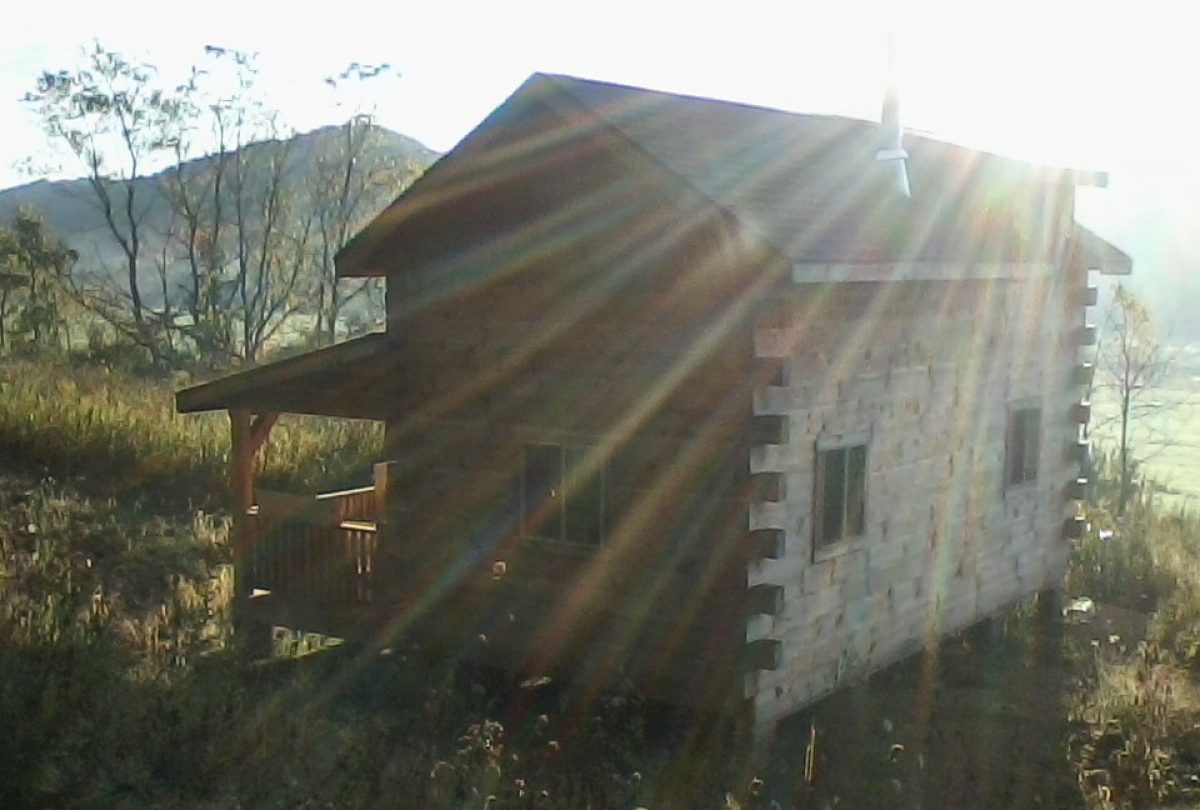
It may be a little premature to start thinking about . . . kayaking . . . but hey, it is getting warmer.  The snow is starting to melt, and my mind is putting together a list of what I want to accomplish this summer.

To start with, food is my number one focus.  Getting my soil in better condition is on the list.  Adding more fruit trees and getting some Concord grapes going is planned.  The Concord grapes I started with last summer did not do well, so just starting over seems like the way to go.

I ordered some hoop house plans . . . but have yet to look at them.  The south side of my cabin is VERY warm when the sun comes out and is a very good location for planting seeds in early spring . . . like now!  There is another project for this summer.

Don’t forget the rocket stove.  Some friends have a wonderful rocket stove that they use in the summer.  I will visit them when they fire it up.  This will get me off the propane tank that I use for cooking on my porch.  Rocket stoves have very few emissions, and kindling, not logs, are fed into it.  It produces a very hot fire.  That is definitely a project, as well.

Of course, there is the vegetable garden.  Hopefully, I will have a better yield this year.  I am going to use mulch and no till to keep the activity that is growing in the soil intact and reduce the weeds and watering I had to do last summer.

And . . . then, I will go kayaking!

Student Climate Strikes Tomorrow!

This is a little late to be posting about . . . but the kids are ramping things up . . . and tomorrow, Friday, March 15 . . . globally . . . students are striking to tell leaders that they need to do something about climate change . . . NOW.  Below is a link with the details:  their demands and how many countries are participating.

https://www.cnn.com/2019/03/13/world/school-climate-strike-walkup-trnd/index.html

Coyote Killing Contests

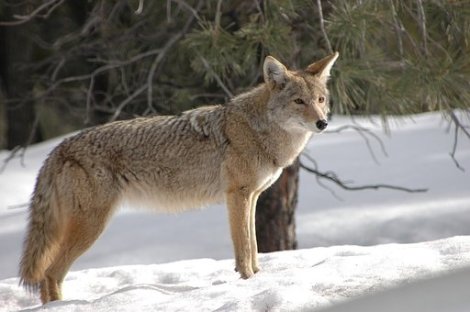
Coyote

Welcome to rural America . . . or NOT.  I heard from a couple of friends that the town next to mine was having a coyote killing contest.  Lovely.  Someone was organizing a protest, thankfully.  It goes without saying that I am totally against killing coyotes or any predator animal, let alone have a contest about it.  A coyote killing contest just moved killing any predators from horrific to barbaric.

These animals deserve to be on the planet as much as we do.  But, we like Nature to do our bidding and have her suit our needs, regardless if there are ecosystems and a natural balance and order to everything, which . . . by the way . . . keeps us alive.  Oh, that doesn’t matter now, does it?

Well, ranching was invented . . . and so began the coyote killing, along with all predator killing of bears, wolves, cougars, bobcats, etc. that may threaten livestock.  Our environmental book club read “Coyote America: A Natural and Supernatural History,” by Dan Flores, which documented how ranching has tried to eradicate the coyote since the beginning.  It was a bit hard to read . . . because . . . unlike ranchers and dairy farmers. . . I think these animals are beautiful.

Every year, predator animals are killed with coyotes having the highest number.  Last year, something like 70,000 were killed.

I had to search online for the bar that was holding the contest, and it became immediately apparent that this happens all over the country.  The pictures of the carnage were hard to stomach.  Could I go and actually witness this at a protest?  I was going to try.

I made my way over to the bar, and there were signs it was well attended by the cars still parked down the street from the parking lot.  There were no signs of coyotes.  The contest was over.  I thought is was at 7:00 p.m. and it was held at 4:00 p.m.  Maybe my subconscious knew I couldn’t handle it, and that is why I got the time wrong.

There are solutions to protect livestock other than blatantly killing coyotes and other predator animals.  Housing chickens during the night, guard dogs, having cows birth in a building are some of the solutions.  Some states are banning the contests, which is a start.

I moved to an area where there is more Nature than people.  That is what I wanted.  But, it doesn’t mean I don’t take precautions.  I purposely don’t feed the birds because I don’t want to attract hawks and eagles that may attack my cat.  There have been sightings of cougars, bobcats, wolves, and bears, however limited, so when I hike or jog, I am surveying the landscape.

A friend of mine went to the gun club monthly meeting to see what they had to say. They discussed the fact there were no “crazy” protesters at the contest.  There were some comments made, and she stood up and said, “I am one of those crazy protesters.” She detailed why these killing contests were not good and actually encouraged more killing of livestock instead of less.  They were respectful and heard her out.  She told them she just wanted a dialogue, and, perhaps, they could have a different type of contest next year.  Several people came up to talk to her after the meeting.

Maybe a few coyotes will get a chance to live this year.