Greta Tells Mnuchin About Climate Math

I know this news is a bit old but I can’t help comment on it.  And, it is short.

Greta Thunberg is a powerhouse . . . no matter who she is confronted with.  So, Steven Mnuchin, the US Treasury Secretary, tells Greta she needs to go to college before commenting on climate math at the World Economic Forum in Davos, Switzerland.  Her comeback is basically that anyone who can add one plus one knows we are in a climate crisis.

Way to go, Greta.

https://www.theguardian.com/business/2020/jan/23/greta-thunberg-told-to-study-economics-by-us-treasury-secretary-steven-mnuchin

How Can Veganism Help the Climate Crisis?

Vegetarianism and veganism . . . first of all . . . are touchy subjects.  I say it is like religion.  No one is going to let anyone take their meat away from them.  But, it is one of the main solutions for the climate crisis . . . so we really need to look at it whether some people want to or not.  In Jonathan Safran Foer’s book, “We Are the Weather:  Saving the Planet Begins at Breakfast,” he says veganism isn’t a silver bullet for the climate crisis but we can’t solve it without it.

I have been a vegetarian for about 15 years now and didn’t give up dairy until maybe 6 years ago.  That came with a little prodding to say the least.  A friend in our environmental group threw down the gauntlet and said that if anyone called themselves an environmentalist, then they would have to become a vegan.  Well, he ruffled many a feather in our group . . . but, I knew he was right . . . and gave up dairy.  Let me tell you . . . dairy is in everything.

Let me give you a little example of why it is an environmental issue.  Yes, they will say the cows are giving off all of this methane by belching or farting.  While that may be true, there are other reasons . . . mainly land.

Recently, I read the book, “Collapse” by Jared Diamond, which I highly recommend.  He wrote it in 2004.  So while climate change was happening, the climate crisis had not reared its ugly head yet.  He doesn’t even really address climate change.  It is all about resource depletion, which by the way, no one talks about.  He highlights the societies that collapsed and the societies that didn’t and why.

Enter . . . Tikopia . . . one of the societies that made it.  There are many reasons that societies make it or don’t.  Tikopia is a prime example of how carrying capacity or managing your resources works and what you need to do to survive.  It is an island that is approximately 1.8 square miles.  With such a small living space, one needs to be very smart about how the resources are used.  First of all, only about 1,200 people can live there so population control is at the top of the list of priorities.  Next, they figured out that they could not raise pigs.  So, no animals are allowed.  There is the land issue.  They eat a very, small variety of fish and turtles in the way of animal protein.

Let’s look at the energy used to raise cows for beef.  I don’t have the stats for acreage used for corn and grain in the US but it is close to 85% or possibly more.  That mother cow has to be fed and watered for 9 months before the calf is born.  Then, the calf is fed and watered for a year or year and a half before it is used for hamburgers, etc.  That is a lot of time . . . close to two years before you get anything out of your investment.  Dairy isn’t quite as bad because you are just feeding and watering the cow, and you get the milk right away.

I don’t have anything against people eating meat.  I have eaten a ton of it throughout my life.  But, if we are going to make it on this planet . . . there are some compromises . . . and some things we are all going to have to give up in order to do so.

People may not realize what it takes to raise a cow . . . or any food or product we buy or consume.  One day I was talking to my sister, and vegetarianism come up.  In my mind, there are four main reasons to become a vegetarian or become vegan.  Those reasons are:  health, saving or not harming the animal, the environment, and it is cheaper.  There may be others.  She had no idea there was an environmental reason.  There may be many other people that don’t realize that, too.

Right now, the Amazon is being deforested.  It has been going on already.  But because Jair Bolsonaro, the new President of Brazil, he is encouraging massive deforestation of the Amazon.  Mind you, deforestation has been happening all around the globe forever . . . and happens to be one of the main reasons societies have collapsed, along with soil depletion and water scarcity.

Back to Tikopia.  It is very small, and they don’t raise pigs.  We live on a finite planet.  It may not be 1.8 square miles like Tikopia . . . but you get the picture.  We have 7.6 billion people here.  Along with the land issue, millions of acres are tilled up releasing carbon into the air every spring to plant corn, soybeans, etc. by big machinery spewing CO2 from diesel into the air.  Planting and harvesting with more big machinery then transporting it.  That’s just the food side.  Those animals need water, too.  There is a lot more involved besides methane from belching and flatulence.

We only have so much land.  Veganism is definitely one of the main solutions for the climate crisis.

Let’s be the humanity that makes it.


Can we Get to the Post Carbon Economy Sooner?

Does the post carbon economy evoke fear of chaos or of hope that the planet can finally heal from the onslaught of severe resource extraction, the burning of fossil fuels, resource depletion, and among many other toxic chemicals seeping into the earth?  A trusty friend sent an article from Insurge Intelligence – Symposium Pathways to the Post-Carbon Economy.  It was written by Nafeez Ahmed on October 19, 2018, titled, “Scientists Warn the UN of Capitalism’s Imminent Demise:  A climate change-fueled switch away from fossil fuels means the worldwide economy will fundamentally need to change.”  Ahmed is reporting on findings from a new scientific background paper prepared by a team of Finnish biophysicists.

It is a very important article that everyone should be reading.  One of the main findings  from the Finnish report is that easy oil is over.  It so much more expensive to extract what is in the ground.  Besides that, market economists aren’t paying attention to what is going on.  They are only looking at what can be made in the short term.  Ahmed said that the market won’t correct this either . . . it is something the government will need to implement.

Ahmed reports that, “Now we’re using more and more energy to extract smaller quantities of fossil fuels.  Which means higher production costs to produce what we need to keep the economy rolling.  The stuff is still there in the ground — billions of barrels worth to be sure, easily enough to fry the climate several times over.”

We tend to focus on the burning of those fossil fuels and the climate crisis at hand.  The climate crisis is definitely creating its own mess all over the world . . . let alone think about the transition off fossil fuels and what that will create in the form of an economic collapse.

The consumer economy is not sustainable on a finite planet.  That may be a simple statement of fact but we are so far removed from the reality of it.  Who can see the vanishing sand?  An Arctic that is melting faster than scientists predicted?  Overfished oceans?  The gunk of tar sands?  Deforestation?  Soil depletion?  Water scarcity?  As long as the shelves are stocked, people in the US are clueless.  There is no indication for the general public in the US that any of that is going on.

Here are a number of changes that need to be made:

  • Air travel and international freight will need to be curbed.
  • The food system has to be overhauled.
  • We need to grow our own food.
  • Switching to a plant based diet is also on the list.
  • Going back to wood as a main construction material instead of concrete and steel.

My friend was concerned that there is no system to replace capitalism.  That is true.  But, in my opinion, I think we need to focus on creating food security.  It is definitely on Ahmed’s list.  Next would be heat using renewable energy off grid in cold climates and water supplies off grid.  Let’s worry about the economy later.  Just get everyone fed.

https://medium.com/insurge-intelligence/scientists-warn-the-un-of-capitalisms-imminent-demise-a679facac985

Happy New Year 2020 and the Climate Crisis

This New Year seems different.  Usually I don’t get too down because of the climate crisis.  It is there, and I keep plugging along trying to do something that will create some change in a positive way.  But then . . . a friend sent this article on Australia on a vet’s diary . . . and the picture was very unsettling.  It is in the Opinion section of The Age by Gundi Rhoades on December 26, 2019 titled, “Cattle have stopped breeding, koalas die of thirst:  A vet’s hellish diary of climate change.”  Here is a little excerpt:

“The whole town is devastated.  My business has halved.  But with no horses to breed, no cattle to test and care for, what am I going to do?  I have worked day and night to build a future for my family, but who would want to buy our property out here?  Who would want to buy a vet clinic in a town where there are no animals to treat because it’s too hot and dry?  Where the cattle become infertile from the 40-degree heat.  All this on black, baked ground here.”

All of a sudden . . . I woke up a bit.  What if I compiled all of these catastrophes together in a list or table?  It is becoming apparent the climate crisis is rearing its ugly head . . . everywhere.  It made me wonder if we have reached a tipping point . . . past the point of no return . . . where no action will make a difference.

I started to recall all of the past articles in the last year or two . . . they are news bits that I hear but don’t totally pay attention to.  France was how hot a summer or two ago?  Or was it all of Europe, for that matter?  How many countries are experiencing massive flooding?  Or massive droughts?

And here in SW Wisconsin, we are experiencing the most mild winter ever.  But then . . . that seems to be the case all over the US.  I heard it is 10 degrees warmer on average across the country.   Well, and I am not totally complaining.  Last year at the end of January, it was -40 for a couple of nights.  That is scary to me!  So, I will take 10 degrees warmer.   But, it is very odd.  What do I know about this being odd?   I have only been here a little over 2 years!

And then, there was another article about Australia and how perhaps we have indeed reached a tipping point.  The world is becoming a scary place . . . very quickly.  How can our leaders stand idly by and do nothing?

https://www.theage.com.au/environment/climate-change/cattle-have-stopped-breeding-koalas-die-of-thirst-a-vet-s-hellish-diary-of-climate-change-20191220-p53m03.html

https://insideclimatenews.org/news/08012020/australia-wildfires-forest-tipping-points-climate-change-impact-wildlife-survival


Think There Was Progress at COP25? Dream On

I had hope this year that a plan by world leaders was going to be put in place to avert the climate crisis or at the very least lessen its impact.  Yes, that sounds like some fairy tail dream, but after the lineup of environmental activists and groups that showed up since last November, it could be possible.  Heavyweights like Greta Thunberg from Sweden, Extinction Rebellion from the UK, the Sunrise Movement in the US, and the global student strikes were all beyond belief.  All were demanding that world leaders address the climate crisis in the drastic way it needs to be handled.  An environmental activist could have some hope.

But, after viewing the interview by Dr. Peter Carter on what was accomplished at COP25 recently in Madrid, that hope has vanished.  Dr. Carter is a scientist that puts the reports together for the Intergovernmental Panel on Climate Change (IPCC).  There is one word for his interview . . .  and that is terrifying.  I have listened to many of Greta’s speeches.  They are honest, direct jabs, backed with science, at the leaders of the world stating they are taking her generation’s future away and doing nothing.  Whereas, in the middle of the Dr. Carter interview, he talked about “biosphere collapse”, and I thought, “We are all going to die.”

He talked about the history of the climate talks and where the problems started.  The talks started in 1992.  If we do some math, that is 27 years.  And in 27 years, no plan has come to the table that every country has agreed to.  No real progress has been made, and we are now in the 11th hour of the climate crisis.  Dr. Carter says there was some progress the first two years, and it has been all downhill since then.  The major countries have been blocking science reports from entering the COP talks, and now they are being dropped completely.  Without the voice of the scientists, nothing is going to change.  The youth will not be listened to.

Dr. Carter went on to talk about how we are on an accelerating trend of CO2, methane, and nitrous oxide that scientists have not witnessed before.  We are at 412 ppm of CO2 and climbing.  There also has been a massive eruption of methane in Barrow, Alaska, that started in August and has remained. Comparing the 2.2 million year ice core level that has been at 800 ppm, it is now at 2,050 ppm.  Methane is a highly concentrated gas that is 86 times more potent than CO2.  This eruption has not been publicized.  He said we need to keep our eye on that eruption in the Arctic.

He ended his interview stating these countries are evil and committing a crime.  They are driving humanity off the cliff.  And, we wonder what we can do as we watch the madness before our eyes.

I highly recommend watching the interview with Dr. Peter Carter, link below.

Clean Energy Seems Like the Answer for the Climate Crisis – But Is It?

Jason Hickel’s article in Foreign Policy, “The Limits of Clean Energy” on September 6, 2019 hits the mark.  As we run to clean energy to stop the climate crisis, let’s pause and look at what that really means.  His article details it nicely.  It may not be what we want to hear but let’s not make the same mistake twice, as we have done with the fossil fuel industry and extreme extraction.

Let’s start with his best quote, “The only truly clean energy is less energy.”  We need to start there.  Unfortunately, most people are thinking that slapping some solar panels up and getting an electric car will do the trick.  His article opens up a whole new can of worms.

Switching from fossil fuel extraction to extracting the resources needed for renewables is just more mining.  As Hickel states, “mining has become one of the biggest single drivers of deforestation, ecosystem collapse, and biodiversity loss around the world.”

Manufacturing wind turbines and solar panels, along with the infrastructure to support and deliver that “clean” energy including batteries for storage tells another story.   There was a report issued by the World Bank in 2017, which detailed what this switch would look like, and it was only to support half of the existing economy.  Hickel goes the extra mile for the rest of the economy and the increase in resources for wind and solar would be “34 million metric tons of copper, 40 million tons of lead, 50 million tons of zinc, 162 million tons of aluminum, and no less than 4.8 billion tons of iron.”  We would need 40 million tons of lithium, which is a 2,700 percent increase for the batteries.  I wonder if this factors in the lithium needed for batteries for electric cars.

And because we have no real idea the cost of resource extraction . . . because we do not see it, his account of a silver mine in Mexico, and silver is needed for solar panels, paints an ecological nightmare that is happening right now.  Just picture this:

“Take silver, for instance. Mexico is home to the Peñasquito mine, one of the biggest silver mines in the world. Covering nearly 40 square miles, the operation is staggering in its scale: a sprawling open-pit complex ripped into the mountains, flanked by two waste dumps each a mile long, and a tailings dam full of toxic sludge held back by a wall that’s 7 miles around and as high as a 50-story skyscraper. This mine will produce 11,000 tons of silver in 10 years before its reserves, the biggest in the world, are gone.

How many other ecological nightmares exist right now along with this silver mine?  But then again, we live in this little bubble . . . so insulated from all the products we buy, except for the people who live near that disaster.

There are water issues and sociological issues in the countries where these resources are extracted.  Some of the resources will run out sooner than others.  We need to look before we go down this road and act wisely.  Please take a look at Hickel’s article.  We need to know the facts.

What we need to do is extreme reduction of our energy and consumption to start with.

https://foreignpolicy.com/2019/09/06/the-path-to-clean-energy-will-be-very-dirty-climate-change-renewables/

Resource Depletion and the Climate Crisis

Resource depletion?  Who talks about it?  No one . . . if you ask me.  It is like a double-edged sword.  Resources and CO2 into the atmosphere, you can’t have one without the other.  Well, you can if you leave the resources in the ground, water, or wherever they are.  Our consumer economy . . . our Western lifestyle of . . . stuff . . . and, convenient energy . . . demands that we take everything we can out of the ground and wherever it comes from.  Extreme extraction is the term out there now, and it is . . . extreme.  But, we want to do something about the climate crisis, too.  Right?

A friend sent out an article by Jason Hickel in Foreign Policy called, “The Limits of Clean Energy,” September 6, 2019.  Can’t say I haven’t thought about some of the facts in the article before.  It is a lesson in Carrying Capacity 101.  He goes through many of the metals, etc. that we will need to replace our fossil fuel laden energy . . . not to mention the energy needed to produce it all.  We are in such a bad place.  How did we get here anyway?

Here is a little example of where we need to go.  Take Jared Diamond’s book, “Collapse.”  The book details the societies that collapsed and the ones that made it, and the reasons for both.  Tipokia is one of the successful societies that made it, after listing many that didn’t like Easter Island, Chaco Canyon, the Anasazi, the Mayans, etc.

Tikopia is a prime example of how you adhere to the carrying capacity of your island or land area.  The island is in the Southwest Pacific Ocean and is roughly 1.8 square miles with about 1,200 people.  It has been that way for some 3,000 years.  And, it is remote so imports aren’t something they can rely on.  They have to be sustainable to survive.

First, population control is extremely enforced.  There is only so much room.  Next, pigs ate too much so they decided they had to go.  If they get any animal protein, it is mainly from fish, and even that has to be monitored.  Their food comes from fruits, nuts, and vegetables.  I don’t remember any discussion of wood for heat so securing lumber wasn’t a top priority, although there are trees there.  Pretty simple life.

And, that is the direction we need to go.  It is a long way to go from where we are.  Just mention population control or going without beef and dairy and people feel entitled to those things.  They don’t get that we are talking about our survival.

I highly recommend reading “Collapse.”  I haven’t finished the section on China . . . and I knew that it was polluted beyond anyone’s imagination . . . but it gets worse.  Anything depleted and polluted is that and more.  And, if it is important to be sustainable and provide your people with the necessary food, water, heat if necessary, etc., and you are importing wood for your timber needs, you aren’t sustainable.  That only depletes another country’s timber or the world’s timber, as in the wood from the Amazon Rainforest.  Importing puts a country or area in a vulnerable position if they can’t provide that resource.

What country is totally sustainable these days?  It is a global economy . . . who cares . . . get that resource from somewhere else.  I don’t have the data on how many areas or countries are sustainable, but my guess is it is very few.  And, they don’t live the lifestyle of a person in Tikopia.

So back to the resources needed to make this transition to clean energy.  Everything in the article is critical to know.  One item stood out for some reason . . . a silver mine in Mexico.  I mean . . . who knew?  All of the stuff we don’t know about . . . unreal.  Anyway, Hickel states that this silver mine is some 40 square miles.  That alone is mind boggling.  The “tailings dam full of toxic sludge held back by a wall that’s 7 miles around and as high as a 50-story skyscraper.”  The silver will be gone in 10 years, and this is the world’s biggest mine.

Yes, we think we can just go to the store and buy whatever we want.  And, create this clean energy and life goes on.

We need to get the facts . . . and now.

https://foreignpolicy.com/2019/09/06/the-path-to-clean-energy-will-be-very-dirty-climate-change-renewables/


Why Aren’t We Acting Like This is a Climate Emergency?

This week I saw a video by Extinction Rebellion by Marc Lopatin and read a book by Jonathan Safran Foer . . . both dealing with . . . when are we going to act on the climate emergency.

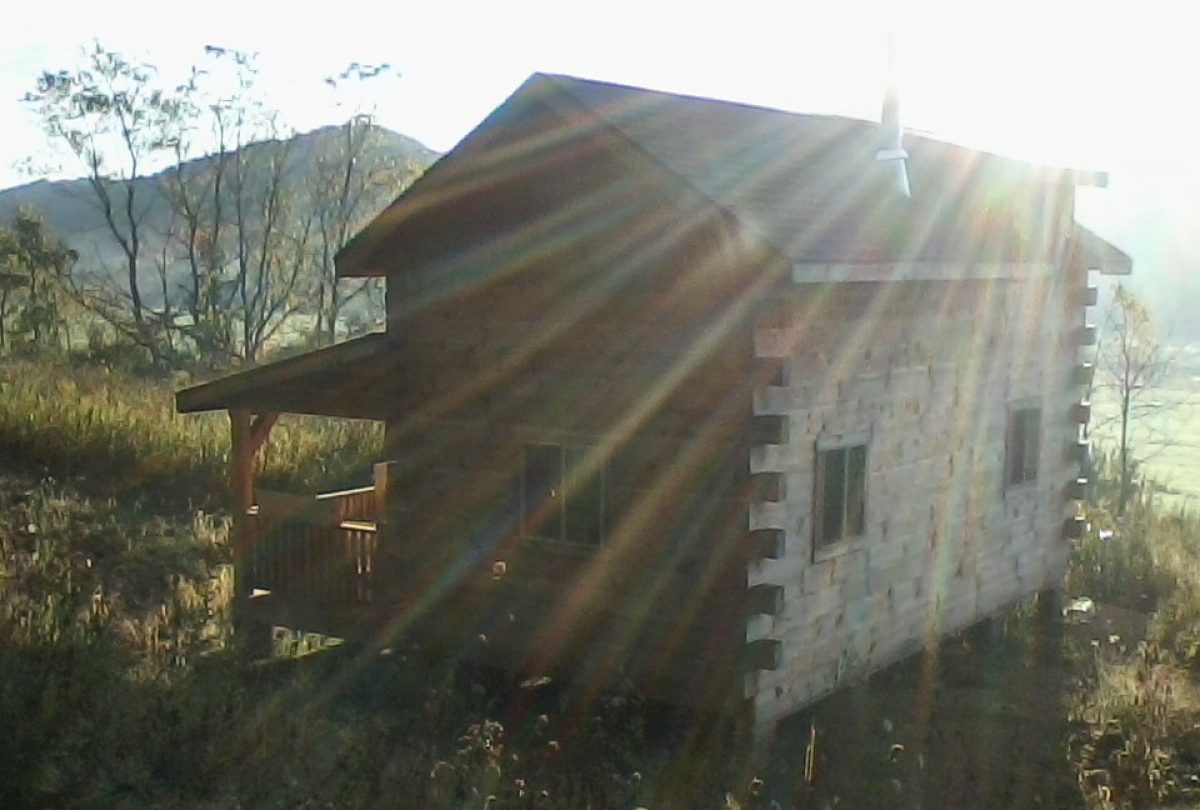
Extinction Rebellion posted a video called, “Making the ‘Emergency’ feel like one” by Marc Lopatin this week.  He spoke about how vulnerable we are.  How vulnerable our food system is.  I couldn’t agree with him more.  That was one of the main reasons why I moved to my cabin in the middle of rural America.

The truth is that the grid provides our heat, food, electricity, and water.  And, the 1% running that show do not care if we live or die.  They only want to make money.  The class I took on the environment taught me about resource depletion besides all about the CO2 in the atmosphere.  That is when I realized I wanted control over my food, heat, and water.

Why don’t people take action all the while hearing this is a climate emergency?  We are insulated . . . in a bubble . . . pushing buttons to turn on our heat, electricity, our water.  Driving to Big Box Stores buying whatever we want from thousands of mile away without any thought of the ramifications of all of those actions.  And, we are stuck in many ways.

I am trying to grow my own food.  How many people really know how to do that?  I know I have so much to learn.  This year I made progress, and my soil is a little better than last year.  I grew a few more vegetables . . . but not enough to get through the winter . . . let alone the next growing season.  How many people have this as a goal?  How many people know this is important?

Where is the emergency?  There are forest fires, droughts, and flooding . . . but they are isolated incidences that we are not in the middle of if we don’t live there . . . and we forget . . . we go back to the day to day routine.  The Earth is warming up very slowly . . . too slow to think this is an emergency.  And, much of the evidence is far away.  Or is it?

In the area in Wisconsin where I live, there is so much more rain.  In the spring, the farmers couldn’t plant, and the in the fall, they couldn’t harvest.  As I harvested my pole beans, many pods had mold inside or were starting to sprout because of the moisture.  This November, several nights were at 4 degrees.  Really?  In November?  Never.  This week we had five cloudy days in a row.  Last night I was eating by candlelight because all my solar lights were dead.  I could say it was romantic . . . but not really.

If we look, we all are experiencing some form of the climate crisis where we live.  It is not life threatening right now for most of us  . . . but how long until it is.  Until we decide to act.

Jonathan Safran Foer’s book, “We Are the Weather:  Saving the Planet Begins at Breakfast,” was a gift from a friend.  It is about the need for us to go to a plant based diet.  But, more than anything, it is a discussion on how we get people convinced to act and make that change.  He states that a plant based diet is not a silver bullet solution for the climate crisis . . . but we can’t solve the climate crisis without it.

Yes, how do we get people to act.  After that class I took in 2009, I was already a vegetarian but still on dairy.  A friend threw down the gauntlet and told everyone in our activist group that if we are environmentalists, we will be vegan.  He ruffled a lot of feathers . . . but I knew he was right . . . and that is how I got off of dairy.

Safran Foer brings up so many ways to look at the reality of the climate crisis . . .  calling everyone to act.  He brings up our relationships with each other as one of those ways.  I don’t know if my friends and family look at me as just an annoyance or an inspiration to become vegetarian and vegan.

There were many curious things he brought up in the book.  Who acted and who didn’t . . . knowing what we all know about the climate crisis or other atrocities in history.  Why don’t we make a sacrifice and change our eating habits.  It is our life we are saving, too?

Time is running out.  What will push us over the edge to act?  Will there be a tipping point?  I hope so . . . and I hope it is soon.

I highly recommend watching the Extinction Rebellion video by Marc Lopatin and reading the book by Jonathan Safran Foer.  They both just may get you to act.

https://mail.google.com/mail/u/0/#inbox/KtbxLthKQVxvFJMDDdmHRbbLgsljqpVrpL?projector=1

https://us.macmillan.com/books/9780374712525
The End of Mortgages Because of the Climate Crisis?

While the rest of us are freaking out about the future of the planet . . . and humanity . . . the financial sectors are worried about earning their last dollar.  And, if you think about it for a minute, that is a real problem.  It is most likely the reason the climate crisis is not being addressed at the drastic level it should be.  Well, the rest of us are concerned about our jobs being threatened but I personally don’t think as much.  I like to say these people at the top have so much money, what do they really have to worry about.  How about food when we can’t grow it anymore?

So, I came across this article that is a prime example of a financial sector worrying about their bottom line in the face of humanity going extinct.  Mortgages.  Yes, the 30-year mortgage is at risk of disappearing.  This would be mainly in areas of the US where the climate disasters are happening, which would affect the industry as a whole.  It seems that with all the flooding, agricultural losses, and forest fires due to the climate crisis, insurance companies are not able to keep up with all that risk.  So, they will not be covering those houses in areas ravaged by the climate crisis.  Hmm.

Now, we have their attention.  If we know how to speak the financial sectors’ language, they all of a sudden know that the climate crisis is real . . . finally.

In a segment on CBS News, Irina Ivanova wrote a piece called, “Climate change could end mortgages as we know them” on November 8, 2019.

In the article, Ivanova, states, “In California, for instance, 50,000 homeowners can’t get property or casualty insurance because of the increased risk to their homes.”  This wipes out a lot of home ownership, which means less taxes paid in those areas for schools, roads, etc.  I believe, if you don’t have insurance for your house, you don’t get a mortgage.

All of a sudden, they are looking for policy changes to address the financial issues from the climate crisis.

This past year, from Greta Thunberg, the Sunrise Movement, Extinction Rebellion, and countless other climate groups around the world, all have been demanding that the governments of the world address the climate crisis.

It may just be the financial sectors that push this to the table.

https://www.cbsnews.com/news/climate-change-could-end-mortgages-as-we-know-them/